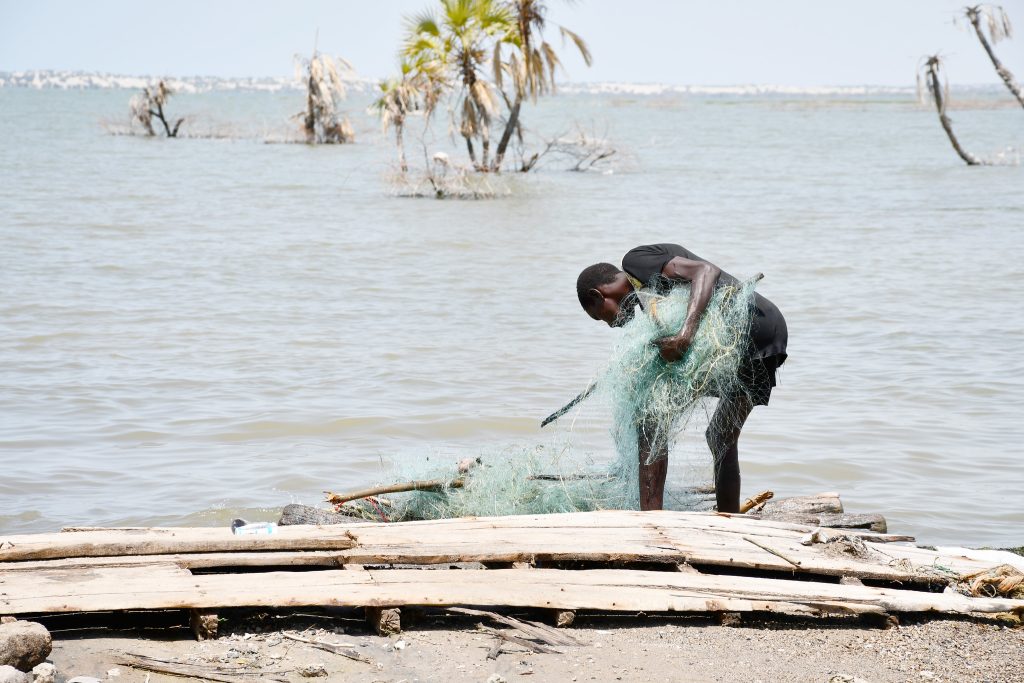
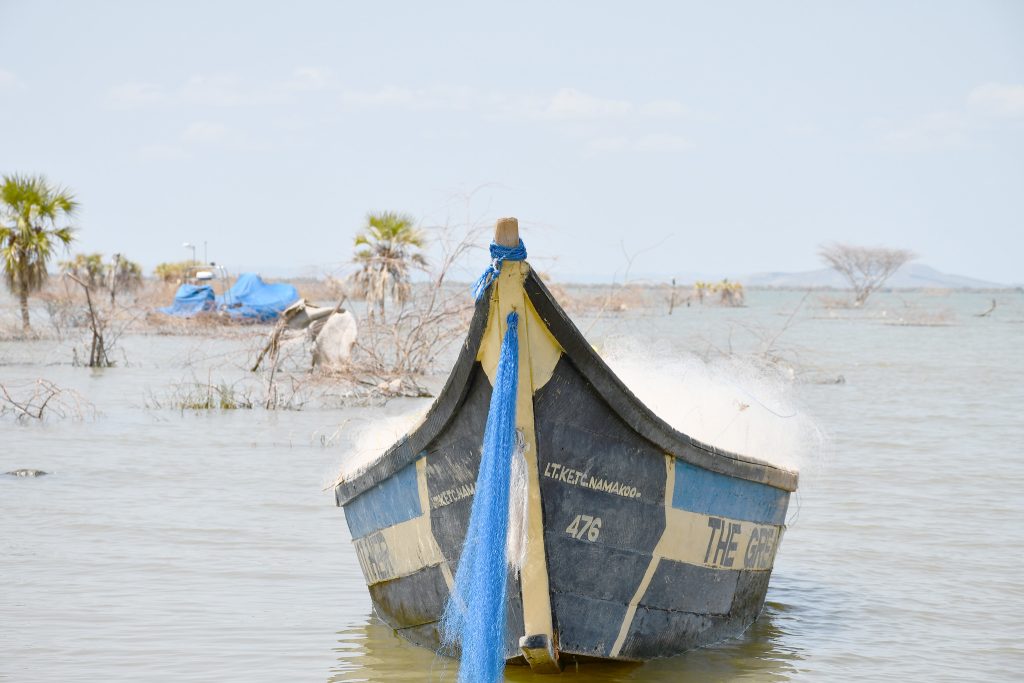
Lake Turkana is more than a body of water — it is a lifeline for hundreds of thousands of Indigenous peoples in northern Kenya and southern Ethiopia. Indigenous communities like the Turkana, Daasanach (also called Merille), Rendille, Samburu, Gabbra, and El Molo have lived on its shores and in its basin for generations, drawing sustenance, cultural identity, and social life from its waters, fisheries, pastoral routes, and rich ecological systems.
Across the basin, about 300,000 people rely directly on Lake Turkana’s waters and resources amid some of the harshest climatic conditions on the continent. Many households face limited access to clean water, health services, and basic infrastructure.
The lake itself is the world’s largest permanent desert lake, extending about 290 km north to south. Its only perennial inflow comes from the Omo River in Ethiopia, which supplies the majority of its water. Changes in water flows due to upstream dams, irrigation schemes, and climate variability have serious implications for water levels, fisheries, grazing patterns, and community livelihoods.
Protecting Lake Turkana, therefore, means protecting the lives, cultures, and futures of the people who call the basin home. It requires a commitment to community-led conservation, regional accountability, and environmental actions that honour indigenous knowledge and human rights.
We support Indigenous communities to lead the governance, stewardship, and protection of Lake Turkana as rights-holders and custodians of the lake and its resources. Our work strengthens community structures, leadership, and collective decision-making to ensure communities are at the centre of managing fisheries, water resources, and environmental protection.
As part of this approach, we work with Beach Management Units (BMUs) as key community institutions responsible for fisheries governance. We strengthen BMUs’ institutional and leadership capacity to carry out their mandates, promote inclusive and accountable governance, and represent community priorities in local, national, and regional decision-making processes.
Lake Turkana’s fisheries are central to food security, livelihoods, and cultural life for communities. Changes in water flow from the Omo River, caused by upstream dams and large-scale agricultural developments, are disrupting fish breeding cycles, reducing productivity, and threatening the survival of fish species. Our work documents these impacts, amplifies community knowledge, and advocates for the protection of the lake’s ecological integrity as a foundation for sustaining livelihoods and intergenerational survival.
We continue to challenge large-scale hydropower projects such as the Gibe and Koysha dams, which have been developed without the free, prior, and informed consent of affected Indigenous communities. These dams have fundamentally altered the natural flow of the Omo River, Lake Turkana’s primary water source, undermining downstream ecosystems and livelihoods. We advocate for accountability, transparency, and respect for Indigenous rights in transboundary water and energy governance
We oppose large-scale cotton and sugarcane plantations in the Omo River Basin that intensify water abstraction and threaten the survival of Lake Turkana. These irrigation schemes divert vast amounts of water from the river, placing additional pressure on already climate-stressed communities. Our advocacy highlights the social, environmental, and human rights costs of extractive agricultural models imposed without community consent.
We work with communities to monitor, expose, and challenge illegal, unregulated, and unsustainable fishing practices that undermine livelihoods and weaken community control over lake resources. Through training community monitors, Beach Management Units and grassroots advocates, we strengthen their capacity to document environmental harm, demand enforcement, and promote fisheries governance that is fair, transparent, and rooted in community rights.